

Glenn Karisch’s Texas Probate Resources
Welcome to the Texas Probate Resources website, your source for information on estate planning, probate, and trust law in Texas. This site is owned and maintained by Glenn Karisch of Karisch Jonas Law, PLLC, in Austin, Texas. For information dating from before February 1, 2011, visit the legacy site at texasprobate.net.

Texas Probate
Case Update -- In re Hudson
In re Hudson, 325 S.W.3d 811 (Tex. App.—Dallas 2010, no pet. h.).

ESTATE ADMINISTRATION -- Appeal -- Admitting Will to Probate and Granting Independent Administration
Will Contestant requested a jury trial. However, the trial court heard the application without a jury and over Contestant’s objection. The court then admitted the testator’s will to probate and issued an order granting independent administration. Contestant then filed a petition for a writ of mandamus.
The appellate court denied the petition because Contestant has an adequate remedy on appeal. The court held that an order admitting a will to probate and granting an independent administration was a final order and thus appealable.
Moral: An order admitting a will to probate and granting independent administration is a final order which a dissatisfied person may appeal.
For summaries of other recent Texas cases, please follow this link: http://www.professorbeyer.com/Case_Summaries/Texas_Case_Summaries.htm.
Gerry W. Beyer
Governor Preston E. Smith Regents Professor of Law
Texas Tech University School of Law
1802 Hartford St.
Lubbock, TX 79409-0004
voice (806) 742-3990, ext. 302
fax (978) 285-7941
e-mail gwb@professorbeyer.com
web http://www.ProfessorBeyer.com
blog http://lawprofessors.typepad.com/trusts_estates_prof/
SSRN (articles) http://ssrn.com/author=461383
Twitter Gerry_Beyer
REPTL bills would make changes to trusts, guardianships and powers of attorney
Rep. Will Hartnett (R-Dallas) filed three bills supported by the Real Estate, Probate and Trust Law Section of the State Bar of Texas Friday.

The most significant is HB 1858, which is a new Durable Power of Attorney Act for Texas. It would replace the current statutory durable power of attorney form for a new form with a disclosure statement and places for the principal to specify if he wants the agent to be able to create, revoke amend trusts; make gifts; create or change rights of survivorship; create or change beneficiary designations; and waive the principal's right to be a beneficiary of a joint and survivor annuity. Most of the changes are based on the new Uniform Power of Attorney Act adopted by the National Conference of Commissioners on Uniform State Laws in 2006. It replaced the old Uniform Durable Power of Attorney Act upon which Texas's current power of attorney statutes are based. The new act is more specific about the agent's duties and responsibilities.
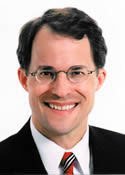
Will Hartnett, Author of HB 1835, HB 1837 and HB 1858
Will Hartnett, Author of HB 1835, HB 1837 and HB 1858HB 1837 would make numerous changes to Texas's guardianship statutes, including replacing the current 5% of income, 5% of disbursements method of determining guardianship compensation with a "reasonable compensation" standard. It also would permit a person with a physical disability only eligible to apply for the creation of a guardianship management trust (867 Trust).
HB 1835 makes mostly minor and technical changes to the Texas Trust Code. One change of significance to persons handling estates of 2010 decedents is an extension of the 9-month deadline for disclaimers to match the one in the 2010 tax act.

Jose Rodriguez, Author of SB 1192, SB 1196, SB 1197 and SB 1198
Jose Rodriguez, Author of SB 1192, SB 1196, SB 1197 and SB 1198Another REPTL bill -- making changes affecting decedents' estates -- is expected but has not yet been filed.
Update: On March 2, 2011, Rep. Hartnett filed HB 2046, which is REPTL's decedent's estates bill. Sen. Jose Rodriquez (D-El Paso), filed identical REPTL bills in the Senate on March 4, 2011:
x-Did Not Pass: HB 1835 -- REPTL trust bill
 Caption: Relating to trusts.
Author: Hartnett
Bill History
Bill Text
Note: While HB 1835, its companion, SB 1197, passed both houses and, as of May 19, 2011, is awaiting Governor Perry's signature.
Relevance: This bill is supported by the Real Estate, Probate and Trust Law Section of the State Bar of Texas and makes several minor or technical changes to the Texas Trust Code. It:
- Contains a special extension of the disclaimer deadline to match the extension in the 2010 tax law. (Section 112.010)
- Makes a slight change in the forfeiture (in terrorem) statute -- "just cause" must have existed for bringing the action, not "probable cause." (Section 112.038)
- Allows waiver of notice of nonjudicial divisions and combinations of trusts. (Section 112.057)
- Makes clear that a county court at law exercising the jurisdiction over a trust given it by Section 4B of the Probate Code has trust jurisdiction. (Section 115.001)
- Makes venue in a trust case proper in a court in which an estate is pending. (Section 115.002)
- Removes a beneficiary whose interest has been distributed, extinguished, terminated or paid from the list of necessary parties to trust litigation. (Section 115.011)
- Makes a couple of technical changes to the Texas Uniform Principal and Income Act (Sections 116.005 and 116.205)
See "REPTL bills would make changes to trusts, guardianships and powers of attorney" on texasprobate.com.
x-Did Not Pass: SB 960 -- Convicted felon as independent executor
Caption: Relating to the waiver of the disqualification of a convicted felon from serving as independent executor of a decedent's estate.
Author: Wentworth
Bill History
Bill Text
Relevance: This bill would permit a convicted felon to serve as independent executor if the decedent appointed the felon and waived the disqualification of felons from service, so long as the felon otherwise qualifies as personal representative.
x-Did Not Pass: HB 1858 -- REPTL power of attorney bill

Caption: Relating to the creation, administration, and interpretation of powers of attorney, including statutory powers of attorney.
Author: Hartnett
Relevance: This bill is supported by the Real Estate, Probate and Trust Law Section of the State Bar of Texas. It is the "Durable Power of Attorney Act," which rewrites Texas law regarding durable powers of attorney. Most of these changes are based on the new Uniform Power of Attorney Act, which was adopted by the National Conference of Commissioners on Uniform State Laws in 2006. It changes the statutory durable power of attorney form significantly. The changes are too numerous to mention here, but here are a few highlights:
Powers of attorney are presumed to be durable unless they expressly terminate on disability.
The act lists the persons who have standing to bring an action to construe a power of attorney, review an agent's conduct or grant appropriate relief.
The point at which an agent accepts appointment is defined.
The act provides protections for persons accepting powers of attorney and consequences for persons who don't accept a power of attorney.
Agents are permitted to do the following only if the principal specifically authorizes these actions:
Create, amend, revoke, or terminate an inter vivos trust.
Make a gift.
Create or change rights of survivorship.
Create or change a beneficiary designation.
Waive the principal's right to be a beneficiary of a joint and survivor annuity.
There's a totally new statutory durable power of attorney form, which includes a disclosure statement and a statement of the agent's duties.
There's a new form for an agent's certification as to the validity of a power of attorney and the agent's authority.
This is a significant piece of legislation that will change power of attorney practice if it is enacted.
See "REPTL bills would make changes to trusts, guardianships and powers of attorney" on texasprobate.com.
x-Did Not Pass: HB 1837 -- REPTL guardianship bill

Caption: Relating to guardianships and alternatives to guardianship for persons who have physical disabilities or who are incapacitated.
Author: Hartnett
Relevance: This bill is supported by the Real Estate, Probate and Trust Law Section of the State Bar of Texas. It makes multiple changes to the guardianship statutes in the Texas Probate Code. These include:
Changing the guardianship jurisdiction statutes in a way that is consistent to 2009's changes to the decedents' estates jurisdiction statutes. This is related to the enactment of the new Estates Code. (Sections 601, 605, 606A, 607A, 607B, 607C, 607D, 607E, and other technical changes)
Clarifies that an attorney ad litem appointed in a temporary guardianship continues to serve until a permanent guardian is appointed or the guardianship application is denied. (Section 646)
Eliminates the 5% of income and 5% of disbursement method of determining guardianship compensation in favor of a "reasonable compensation" standard. (Section 665)
Makes it easier for the conservator of an adult disabled child to obtain a guardianship of that child. (Section 682A)
Fixes some technical problems caused by 2009 changes to the physician's certificate requirements for guardianships. (Section 687)
Eliminates the need to list other co-owners of property on guardianship inventories. (Sections 729 and 730)
Clarifies that a guardianship of the estate shall be settled when all of the guardianship assets are transferred to a pooled trust subaccount. (Section 745)
In the settlement of a guardianship estate, the attorney ad litem's fees may be taxed as costs instead of automatically coming from the ward's estate. (Section 745)
Changes the maximum age for a guardian of a person to "voluntarily" admit the ward to an inpatient psychiatric facility from 16 to 18. (Section 770)
Makes it possible to apply to the court for permission to transfer a portion of the ward's estate "as necessary to qualify the ward for government benefits." (Section 865)
Permits a person with a physical disability only to apply for creation of a guardianship management trust (which may be necessary to qualify for governmental benefits). (Sections 867, 868, 868C, 869 and 870) The court cannot require the trustee of a trust created for a person with a physical disability only to file annual or final accountings. (Sections 871 and 873)
Requires the trustee of a guardianship management trust to file an "initial accounting" (the equivalent of an inventory) within 30 days after the date a trustee receives property. (Section 870A
Clarifies who can apply for the establishment of a pooled trust subaccount and who is eligible for a pooled trust subaccount. (Sections 910 and 911)
See "REPTL bills would make changes to trusts, guardianships and powers of attorney" on texasprobate.com.
x-Did Not Pass: HB 1813 -- Unvested contingent beneficiary is still a trust beneficiary
Caption: Relating to a beneficiary or interested person for the purposes of the Texas Trust Code.
Author: Phillips
Bill History
Bill Text
Relevance: HB 1813 would change the definitions of "beneficiary" and "interested person" in Section 111.004 of the Trust Code to specifically include a beneficiary "whose right to benefit from the trust is contingent, regardless of whether the right to benefit from the trust is presently vested." This language may be unnecessary, since the definition of beneficiary now in the Code means "a person for whose benefit property is held in trust, regardless of the nature of the interest." It may have an impact on the right of remote beneficiaries to demand accountings and participate in litigation, although that is not clear.
Bill may codify "fraud on the community," at least in divorces

Senfronia Thompson, Author of HB 908
Rep. Senfronia Thompson (D-Houston) filed HB 908, which would add Section 7.009 to the Texas Family Code to define "fraud on the community" and require courts hearing suits for dissolution of a marriage to factor it into property divisions. Even though it appears to apply only to suits for dissolution of a marriage, the bill interests probate lawyers because the concepts may bleed over into decedents' estates.
Currently "fraud on the community" is an equitable concept developed in case law. HB 908 defines fraud on the community to mean "improper conduct by a spouse to the detriment of the community estate." It specifically includes a spouse "wrongfully conveying property out of the community estate," "wasting community funds or property" and "failing to provide an accounting of money transferred from the community estate."
This would broadly define the concept, at least as it applies in divorce cases. The bill provides that, before dividing the community estate in a divorce, the trier of fact must determine whether a spouse has committed fraud on the community. It would appear to require this determination even if no one alleges fraud on the community.

Chris Harris, Author of SB 817
If the trier of fact determines that a spouse has committed fraud on the community, the court is required to calculate the value by which the community estate was depleted as a result of the fraud on the community, determine the amount of the "reconstituted estate" (defined to mean the total amount of money that would have been in the community estate if the fraud on the community had not occurred), divide the value of the reconstituted estate between the parties, and award to the spouse that committed fraud on the community that portion of the estate that the spouse depleted.
The bill says it applies to pending and future divorce cases. However, the existence of the statute -- particularly the definition -- might influence fraud on the community claims in probate estates.
The bill has not yet been referred to committee.
Update: Sen. Chris Harris (R-Arlington) has filed SB 817, which is the companion bill to HB 908.
x-Did Not Pass: SB 817 -- Fraud on the community in divorce cases
Caption: Relating to the division of community property on dissolution of marriage.
Author: Harris
Bill History
Bill Text
Note: While SB 817 did not pass, its companion, HB 908 passed both houses and, as of May 19, 2011, was awaiting Governor Perry's signature.
Relevance: This bill applies only to suits for dissolution of a marriage. It defines "fraud on the community" and requires the court to determine if a spouse has committed fraud on the community. If the court finds that a spouse has committed fraud on the community, it is required to calculate the "reconstituted" community estate and divide the reconstituted estate based on the fraud.
See "Bill may codify 'fraud on the community,' at least in divorces" on texasprobate.com.
Michael Jackson's estate is working its way out of debt

Although singer Michael Jackson was more than $400 million in debt when he died, his executors report that his estate has generated more than $310 million since his death and that they have used $159 million to pay down the debt, according to a story in TheChristian Science Monitor.
The information comes from an accounting filed by executors John Branca and John McClain reporting transactions through December 31, 2010. The Monitor quotes from the accounting: "Although there remain unresolved creditor claims, pending litigation and additional challenging business, tax and legal issues, and the estate is not yet in a condition to be closed, the executors have made substantial progress in reducing the estate's debt."
To see the docket sheet for this complex probate proceeding, go to the probate court's web site, click on the "Case Summary" link in the left column, and then enter "BP117321" in the Case Number field. To see Michael Jackson's 5-page will, click here.
Enacted-Effective 9/1/11: SB 748 -- Effect of death or divorce on LLC interests
Caption: Relating to business entities and associations.
Author: Carona
Bill History
Bill Text
Relevance: This bill enacts new Section 101.1115 of the Business Organizations Code to provide that, upon the death of a member or a member's spouse or on the divorce of a member, the person receiving an ownership interest in an limited liability company is only an assignee, not a full member. Assignees are entitled to economic benefits but not voting rights.
Steve Akers' Heckerling Musings (2011)

Steve Akers
Steve Akers of Bessemer Trust has published his summary of discussions and presentations at the 45th Annual Philip E. Heckerling Institute on Estate Planning held in January 2011. It is hard to imagine anyone more qualified to report on such an event than Steve. The 96-page paper goes beyond a mere summary to include general discussions of the Tax Relief, Unemployment Insurance Authorization, and Job Creation Act of 2010 and its implications on estate planning.
Steve's summary is available here and on Bessemer's website.
Among the many topics covered is the possible clawback tax on gifts made in 2011 and 2012 if the tax-free amount is reduced in later years. Steve also summarizes the planning suggestions of prominent tax practitioners as well as their predictions about what will happen in 2012.
Enacted-Effective 9/1/11: SB 481 -- Removal/reinstatement of guardian
Caption: Relating to the removal of a guardian of an incapacitated person ordered by a court.
Author: Harris
Bill History
Bill Text
Relevance: Requires notice to a removed guardian and a hearing on an application for reinstatement as guaridian within 60 days of the date of removal.